
At a time when social media has made it easier than ever to voice opinions about the world’s problems, Banothando Ngubane decided she wanted to do something more.
The founder of the Abanothando Girls Foundation speaks candidly about the realities that shaped her outlook. Although she describes her upbringing as privileged, she was never isolated from the struggles faced by many South Africans. Growing up, she was exposed to the challenges experienced by those around her and became increasingly aware of the barriers that continue to affect young women and girls.
“I wasn’t oblivious to the difficult side of life,” she says. “As much as I was privileged, I was still engaging with people who were having difficulties.”
For years, those observations remained just that. Observations. Like many young people, she cared deeply about social issues but lacked the resources to make a meaningful contribution. As she grew older, however, she began to understand that even the smallest interventions could have a profound impact.
A packet of sanitary pads, often overlooked as an everyday necessity, became symbolic of a much larger issue. For many girls, the inability to access basic hygiene products affects their dignity, confidence and ability to participate fully in daily life.
The idea that would eventually become the Abanothando Girls Foundation was not born in a boardroom or through years of strategic planning. Instead, it emerged from a moment of reflection after Ngubane read A Thousand Splendid Suns, Khaled Hosseini’s acclaimed novel exploring the lives of women living under Taliban rule in Afghanistan.
The story left a lasting impression.
“Reading that book opened my eyes to how much oppression women experience,” she explains. “I reached a point where I realised I couldn’t just keep sharing my opinions online. I needed to do something that could make a tangible difference in someone’s life.”
While the circumstances portrayed in the novel differ significantly from those facing South African women, the underlying themes of inequality and disadvantage resonated with her. She began thinking about the challenges affecting girls closer to home and identified period poverty as an issue that demanded immediate attention.
The result was the launch of the Abanothando Girls Foundation, an initiative dedicated to supporting young women through the provision of hygiene products while working towards broader goals of empowerment and development.
Ngubane is careful to emphasise that her vision extends far beyond the distribution of sanitary products.
“I want to go beyond hygiene. I want to empower women through education and opportunities. I want women to have support systems and guidance so that they don’t always have to struggle to figure out what comes next.”
For her, empowerment is not an individual outcome but a collective one. She believes that helping a single woman creates a ripple effect that can reach families, communities and future generations.
“When you uplift one woman, she can go on to uplift others.”
The foundation’s first initiative demonstrated just how much can be achieved through determination and community support. Planned in less than a week, the drive exceeded expectations and attracted contributions from family, friends and members of the public who believed in the cause.
One encounter in particular remains memorable. While purchasing packaging materials for the hygiene packs, Ngubane explained the purpose of the initiative to a store manager, who responded by offering a substantial discount on the supplies.

Moments like these reinforced her belief that people are often willing to help when they are given the opportunity to contribute to something meaningful.
The foundation’s first distribution took place at Actonville Training Centre, a school catering to learners with special needs. Ngubane deliberately chose to focus on this community, believing that young women with disabilities often face additional barriers that leave them particularly vulnerable.
The hygiene packages distributed through the initiative currently contain sanitary pads, soap and deodorant, with each package designed to support a recipient for approximately one month. Future plans include expanding the contents to include additional essentials such as lotion and other personal care products.
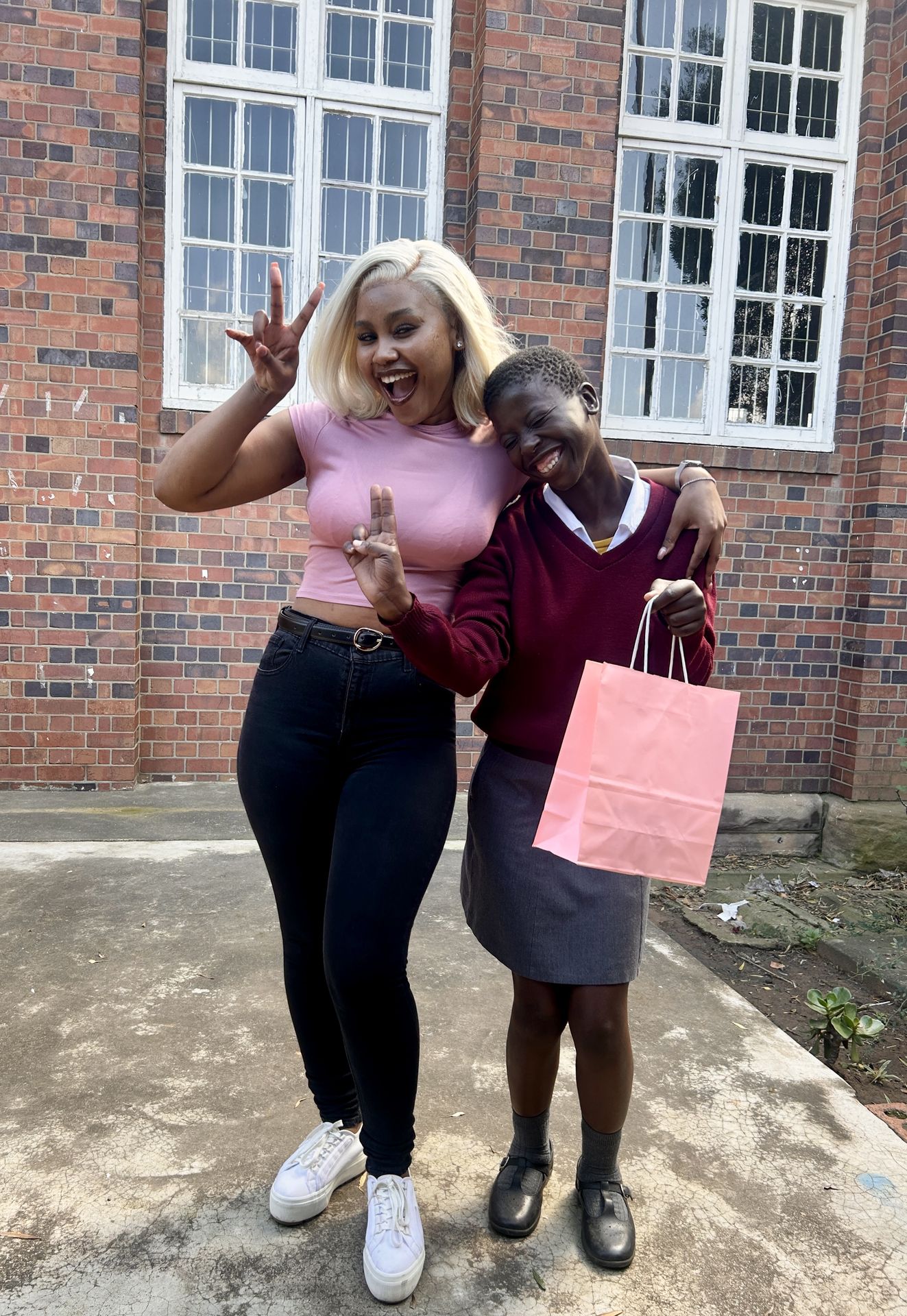
Despite still being in the process of formal registration, the foundation has continued to attract support. Without a dedicated donation account, many supporters have chosen to contribute products directly, purchasing items and arranging delivery to the organisation. Others have donated hygiene products individually, helping the foundation continue its work while administrative processes are finalised.
Ngubane estimates that a donation of approximately R150 can provide a complete package for one girl, a figure she often shares to demonstrate how accessible meaningful giving can be.
Operating primarily within Gauteng’s East Rand, the foundation remains in its infancy, yet its ambitions stretch far beyond provincial borders. Ngubane envisions a future in which the organisation expands throughout South Africa, across the African continent and eventually to communities around the world where women continue to face disadvantage.
“Wherever women are disadvantaged, I would love for the foundation to make a difference,” she says.
For now, however, her focus remains on building something sustainable, one initiative at a time.
The story of the Abanothando Girls Foundation is not one of vast resources or institutional backing. It is the story of an individual who chose action over observation and service over complacency. In an era often defined by personal advancement and digital activism, the organisation serves as a reminder that meaningful change frequently begins with something far simpler: the decision to help.
For Ngubane, that decision started with a single idea and a single drive. Today, it continues with every package distributed, every girl supported and every person inspired to take action of their own.