
South Africa has long struggled with one of the highest rates of sexual violence in the world, and despite years of awareness campaigns, tougher laws and calls for justice, thousands of women continue to become victims every year. It is against this backdrop that a controversial anti-rape device, known as the Rapex, has once again sparked debate over whether innovation could play a role in preventing sexual assault or whether it could expose victims to even greater danger.
The device was developed by South African inventor Sonette Ehlers, who said she created it after years of working with rape survivors and hearing repeated stories of trauma. According to Ehlers, existing efforts have largely focused on responding after a rape has occurred rather than providing women with a tool that could help them escape during an attack.
“Nothing has ever been done to help a woman so that she does not get raped and I thought it was high time,” Ehlers said.
The Rapex is worn internally by a woman in a similar way to a tampon before any potential attack. During a rape, the device attaches itself to the attacker’s penis using small inward-facing barbs. According to Ehlers, the design is intended to cause severe discomfort without permanently injuring the attacker, giving the victim an opportunity to escape and seek help.
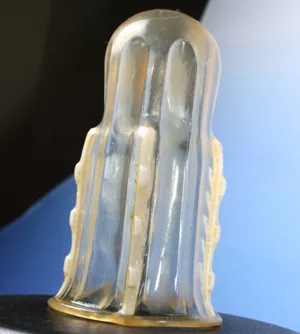
One of the key features of the device is that it cannot simply be removed by the perpetrator. Instead, medical intervention is required to remove it, meaning the attacker would likely have to seek treatment at a hospital where healthcare workers could identify the unusual injury and notify police. Supporters argue this could make it significantly easier for investigators to identify suspects, particularly in cases where victims are unable to identify their attacker or where forensic evidence is limited.
Beyond helping identify perpetrators, the device is also designed to function similarly to a female condom by creating a physical barrier that could reduce the risk of pregnancy as well as the transmission of HIV and other sexually transmitted infections. This is particularly significant in South Africa, which continues to carry one of the world’s largest HIV burdens, making sexual violence not only a criminal issue but also a major public health concern.
The proposal comes amid persistent concerns about the country’s rape statistics. Police record more than 50,000 reported rapes each year, but researchers and advocacy organisations believe the true number is likely far higher. Many survivors never report assaults because they fear retaliation, social stigma, lengthy court processes, or because the perpetrator is someone they know. Experts have suggested the actual number of sexual assaults could be several times higher than official crime statistics indicate.
For many young South Africans, particularly students and women living in urban areas, this reality has become an everyday concern. Universities, public transport, nightlife districts and residential communities have repeatedly been the focus of conversations around gender-based violence, with recent incidents once again raising questions about whether enough is being done to protect women before crimes occur rather than only prosecuting offenders afterwards.
However, while the Rapex has been praised by some as an innovative attempt to shift power back to victims, it has also drawn strong criticism from organisations working with survivors of sexual violence.
Advocates warn that the device could potentially escalate violence during an assault if an attacker reacts aggressively after being injured. Some fear that an enraged perpetrator could retaliate by inflicting even greater harm on the victim.
Sam Waterhouse, advocacy coordinator for Rape Crisis, expressed these concerns, saying:
“If a victim is wearing such a device it may enrage the attacker further and possibly result in more harm being caused.”
Others have criticised the concept itself, describing it as extreme or even barbaric. Ehlers rejects that criticism, arguing that society should instead focus its outrage on rape rather than on attempts to prevent it.
“This is not about vengeance… but the deed, that is what I hate,” she said.
The device itself has undergone limited testing. Ehlers said women tested it for comfort while prototypes were evaluated on anatomical models, although it had not yet been tested during real-world use at the time it was introduced. Production was expected to follow further development and regulatory processes.
The debate surrounding the Rapex reflects a broader question confronting South Africa: should efforts focus solely on improving policing, prosecution and education, or should technology also become part of the country’s response to gender-based violence? While prevention programmes, awareness campaigns and tougher criminal penalties remain essential, the continued scale of sexual violence has left many questioning whether entirely new approaches deserve consideration.
Ultimately, the Rapex remains one of the most controversial proposals in the fight against gender-based violence. Supporters see it as an innovative tool that could help victims escape, preserve evidence and identify perpetrators. Critics argue it could unintentionally place women at even greater risk during an already dangerous situation. What is clear, however, is that the conversation it has sparked continues to highlight the urgent need for stronger measures to prevent sexual violence and better protect women across South Africa.